


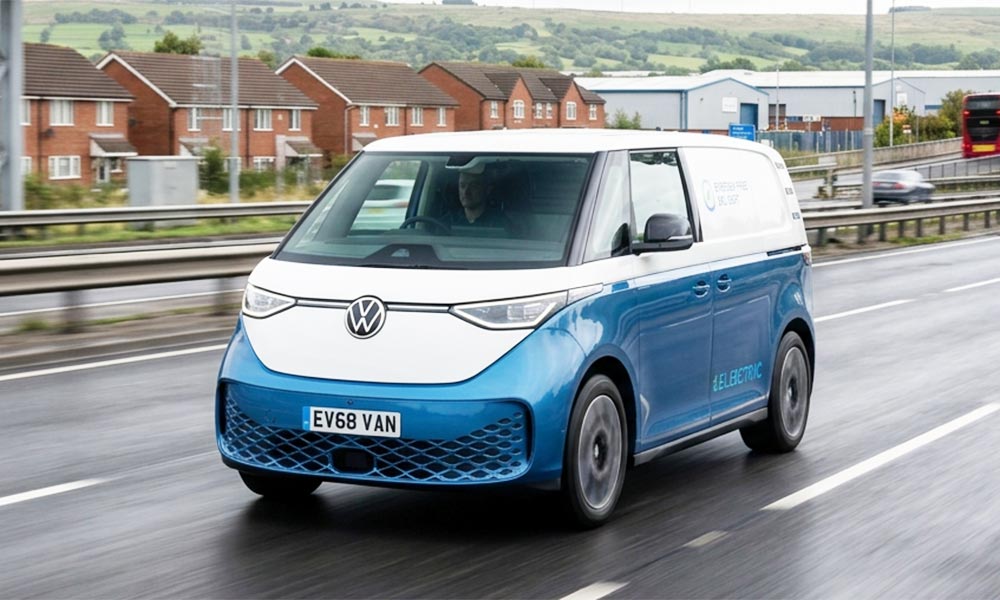
The UK’s commercial vehicle market has continued its recent growth, with electric vans making particularly strong progress.
New light commercial vehicle (LVC) registrations increased by 22% in July, reaching 28,578 vehicles, according to figures published by the Society of Motor Manufacturers and Traders (SMMT). It was the fourth month in a row that the market had recorded year-on-year growth, taking registrations for the first seven months of the year to 187,226 – an increase of 4.3% compared with the same period last year.
The biggest gains came from larger commercial vehicles, while electric vans also reached a new milestone.
Electric vans continue to gain ground
Battery electric van registrations jumped by 74.1% in July, giving electric models a 14.7% share of the UK LCV market for the month.
That represents the strongest monthly performance for electric vans since August 2025 and highlights the growing interest from businesses looking to reduce emissions and running costs.
Electric vans have also reached double figures in terms of their market share across the year so far. Between January and July, battery electric vehicles accounted for 10.6% of new LCV registrations.
Although this is a significant improvement, electric vans still have some way to go to meet the UK’s current targets for zero-emission commercial vehicles.
Large vans lead the wider market
It wasn’t just electric vehicles driving growth in July. Large vans remained the dominant part of the market, with registrations increasing by 29.9% to 20,842 vehicles.
Medium-sized vans also performed strongly, rising by 20.7% to 4,993 registrations.
Smaller vans recorded more modest growth, with registrations up 11.8% to 825 vehicles. Meanwhile, 4×4 registrations climbed by an impressive 66.1%, reaching 1,030 vehicles.
Pickups were the notable exception. Registrations fell by 53.2% to just 888 vehicles, marking the tenth consecutive month of decline for the segment.
Why aren’t more businesses switching to electric vans?
Despite the rapid increase in electric van registrations, there are still several factors making the transition more complicated for businesses.
The initial purchase price of an electric van can be higher than an equivalent petrol or diesel model. For a business operating several vehicles, that difference can have a significant impact on the cost of renewing a fleet.
Charging is another important consideration. Operators need access to reliable charging facilities, whether that’s at their premises, at drivers’ homes or through the public charging network. Businesses covering long distances or operating around the clock may also need to carefully plan when and where vehicles can be charged.
Payload and range can also influence purchasing decisions. While electric vans have improved considerably, businesses need to be confident that a vehicle can complete its daily work without compromising productivity.
A changing commercial vehicle market
The latest figures suggest that electric vans are becoming a much more realistic option for UK businesses. A 74.1% increase in monthly registrations is significant, particularly as companies continue to look at ways of reducing emissions and managing their long-term operating costs.
However, the transition won’t happen overnight. Businesses have different requirements depending on their industry, mileage, payload and operating patterns, meaning there isn’t a single solution that works for every fleet.
As electric van technology develops and charging infrastructure continues to expand, more operators could find that switching away from traditional diesel vans makes financial and practical sense.
For now, the latest registration figures provide a clear indication that electric vans are moving further into the mainstream, with July setting a new benchmark for their share of the UK commercial vehicle market.


